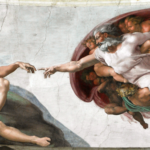
 What does the developer of an increasingly intelligent AI owe to its creation? Anthropic has given that question a lot of thought – but perhaps not enough.
Much has been made of the new versions of OpenAI’s ChatGPT and Anthropic’s …
 Last week, the U.S. Department of State released its Agency Strategic Plan for 2026 – 2030. As one would expect, it bears virtually no relation to the longer and more detailed predecessor joint plan of the State Department (and …
 On December 29, the US Patent and Trademark Office (US{TO) announced the formation of what it described as a “Standard-Essential Patent Working Group to renew American leadership in technology standards.” That announcement includes perhaps the strongest statement yet of the …
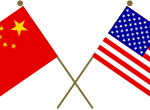 Twenty-five years ago, the American National Standards Institute (ANSI) convened a working group of public and private sector representatives to draft the first version of a standards strategy for the United States. After much work, that document was approved. Every …
 Two decades ago, an ad hoc coalition of major companies (mostly acting behind the scenes), open source developers, and technology freedom advocates led an effort to challenge Microsoft for control of the desktop. The weapon at their disposal was the …
On March 4, 2024, a researcher named Alex Albert posted what he referred to as a “fun fact” deriving from his testing of Claude 3 Opus, the most advanced large language model chatbot released to date by Anthropic, one of …
The following article was co-written with Michele Herman of JustTech
Open source software and open standards have many similarities but the legal frameworks under which each are created have real and important differences. Nonetheless there is an increasing desire to …
The U.S. Department of Commerce Bureau of Industry and Security (BIS) added Chinese 5G technology giant Huawei to its Entity List more than three years ago. The immediate result was the spread of uncertainty and doubt among the hundreds of …
The unleashing of unprovoked acts of violence against the people of Ukraine has both horrified and united much of the world against Russia. Even historically neutral Switzerland has condemned Putin’s aggression. And aid is flooding into the beleaguered democracy from …


